A night bus journey between Lyon and Barcelona, eight hours on the road, and the prospect of sleeping upright with the air conditioning blowing on your neck. We all know this situation. Comfort on a night bus doesn’t come down to luck: it requires preparation before boarding, with some concrete choices regarding equipment and posture. Understanding what truly hinders sleep during the journey allows you to arrive rested rather than sore.
The cold on a night bus: the real disruptor of sleep during the journey
We first think of noise or bumps. However, feedback from regular travelers points in another direction: the main factor for nighttime awakenings on a bus is the cold. Since powerful air conditioning has become widespread on long-distance routes, the temperature on board drops significantly at night, sometimes well below what one anticipates when boarding a bus in the middle of summer.
A thin fleece or a large scarf tucked into your carry-on luggage can radically change the situation. You want a lightweight thermal layer, not a heavy coat: the goal is to compensate for the ventilation without sweating as soon as the bus makes a stop with the doors open. Tight clothing should be avoided, both for thermal comfort and blood circulation.
To know how to sleep well on a bus, this temperature issue is the first lever to adjust, even before thinking about a pillow or a mask.
Darkness and sound isolation: the combination that changes sleep duration on the bus
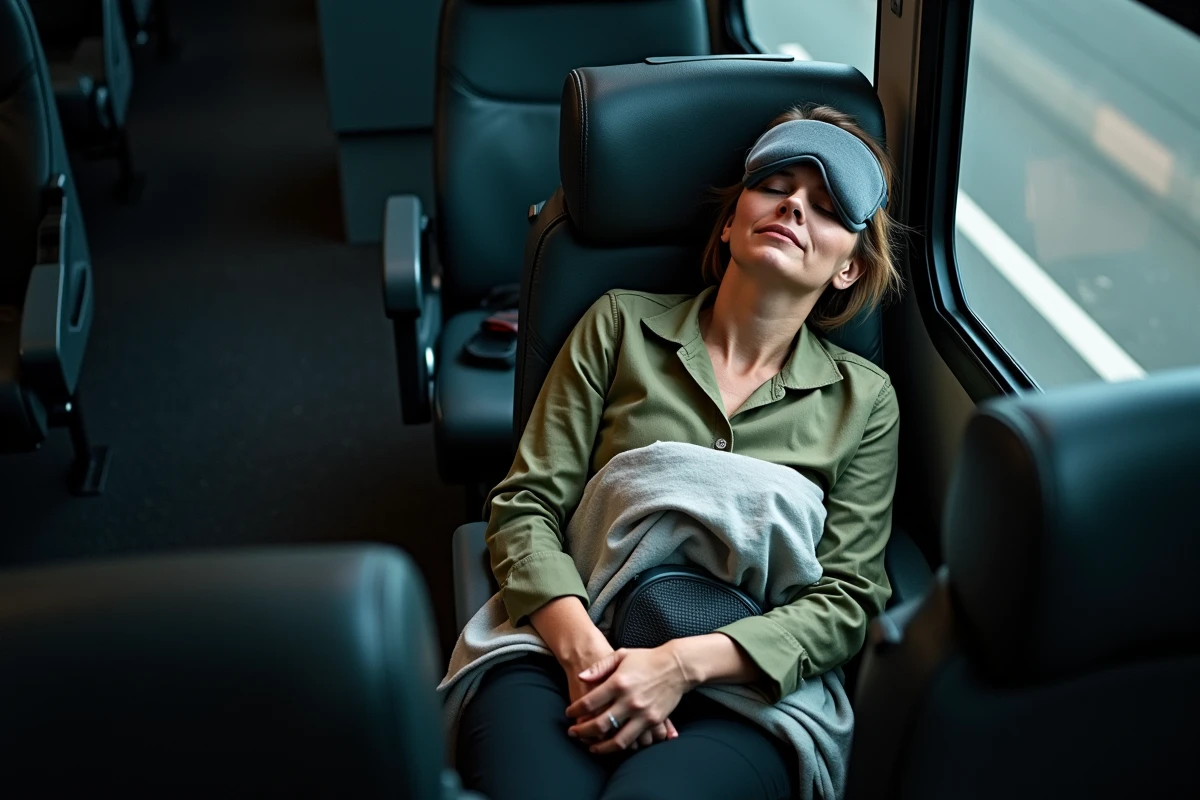
Sleep mask and earplugs. This has become a reflex for air travelers, much less so for those taking the bus. The logic is the same. The quality of darkness and sound matters as much as the seat’s inclination for achieving continuous sleep during the journey.
A mask alone is not enough: stops at bus stations, conversations, and the engine’s changing hum during climbs create an unstable sound landscape. Noise-canceling headphones or simple foam earplugs create a sufficient bubble. The combination of both accessories significantly increases continuous sleep time compared to simply leaning against the window.
Choosing your isolation gear for the journey
- An enveloping sleep mask, with cavities for the eyes rather than a flat band that presses on the eyelids, remains comfortable over several hours of travel.
- Memory foam earplugs adapt to the ear canal and reduce low-frequency engine noise, where standard headphones let them through.
- A noise-canceling headset is better if you want to listen to a calm playlist or a podcast to fall asleep, but its weight can be uncomfortable in a side position.
Body position and seat choice for sleeping on long-distance buses
Recent buses on long-distance routes increasingly feature shell-type seats, which limit head tilting. This is not yet the norm everywhere, and feedback varies on this point depending on the companies and destinations. On a standard seat, the head tilting to the side remains the primary cause of micro-awakenings.
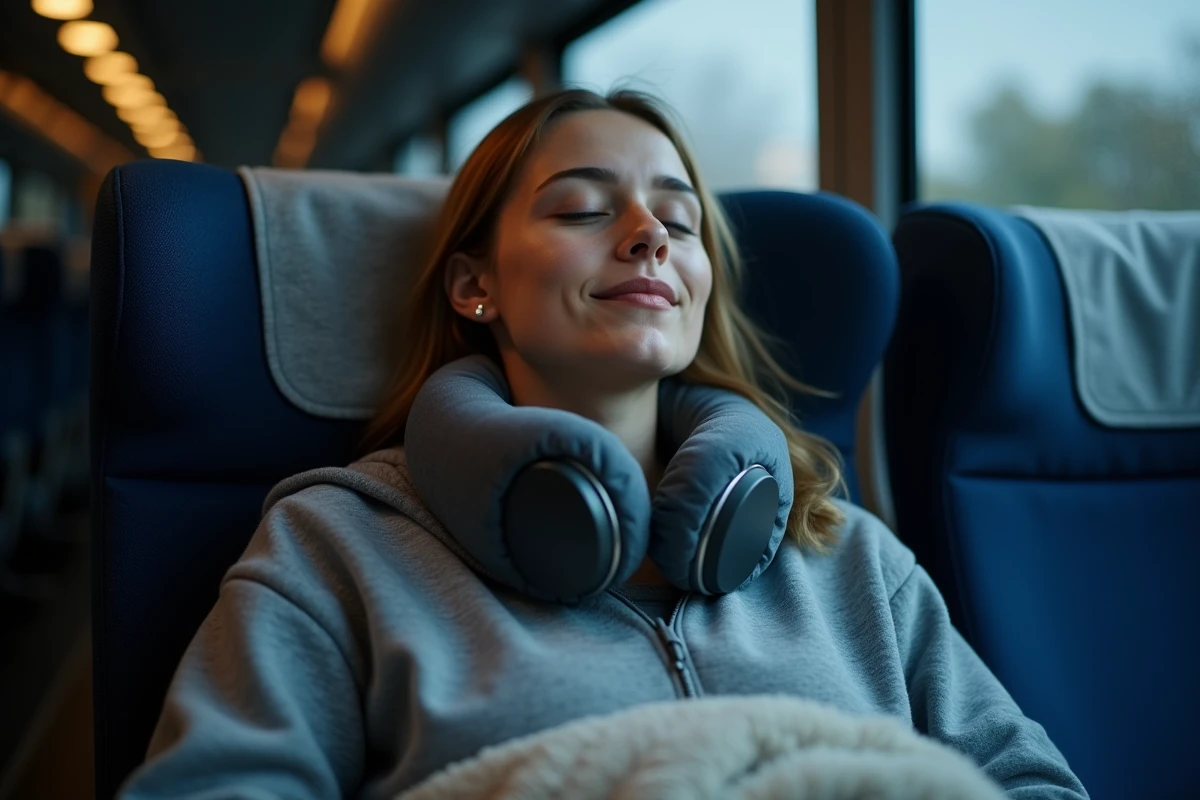
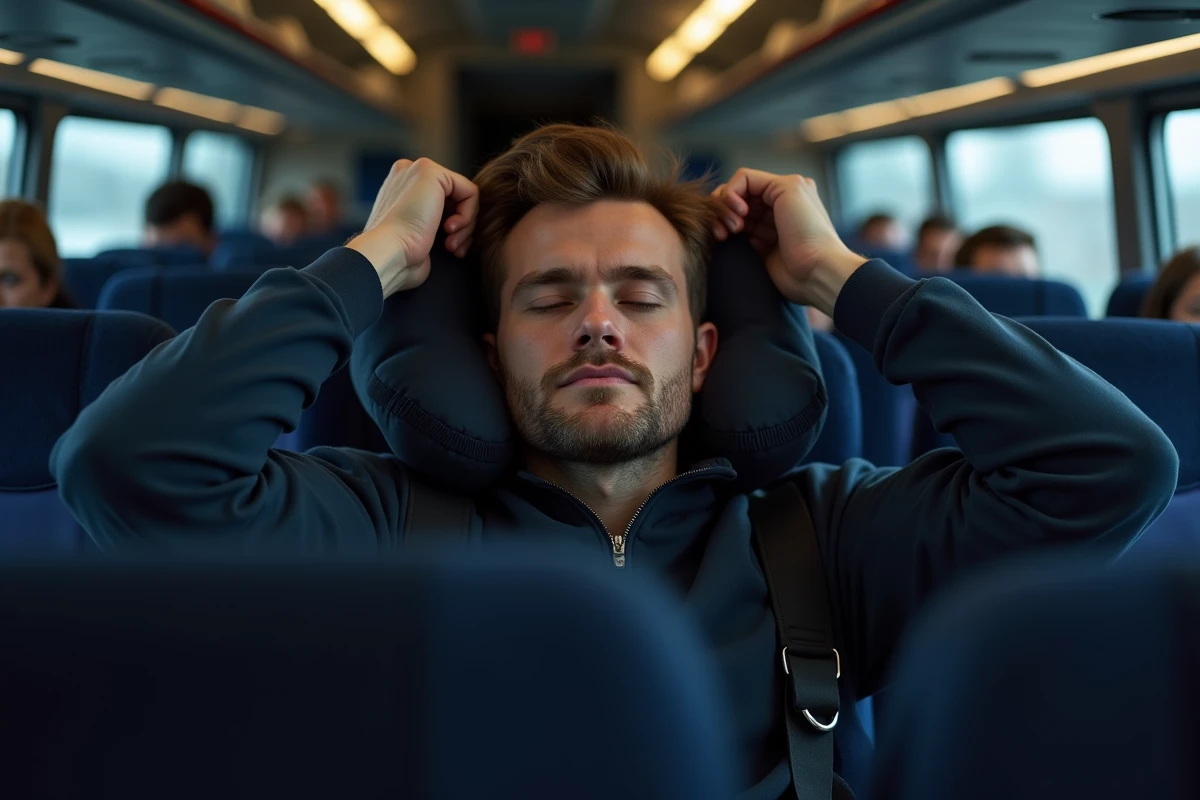
A U-shaped travel pillow stabilizes the neck, but it works best in an upright or slightly reclined position. If the seat reclines significantly, it’s beneficial to wedge the pillow between the shoulder and the window to create lateral support. The idea is to block head movement rather than support it from underneath.
Adjusting your posture according to the type of seat
By the window, you can lean against the wall. By the aisle, it’s trickier: the head lacks a natural support point. Booking a window seat significantly changes sleep quality. Most companies allow you to choose your placement at the time of booking, and this choice is well worth any additional fee.
The legs pose another problem on long journeys. Keeping the knees bent at a right angle for hours compresses circulation. Slightly extending the legs under the seat in front or resting them on a small soft bag on the floor relieves pressure and reduces numbness.
Preventing venous thrombosis during a night bus journey
The risk of venous thrombosis is often associated with long-haul flights. Night bus journeys are now classified as moderate-risk situations for blood circulation, similar to some medium and long-haul flights. Remaining immobile in a seated position for several hours slows venous return in the legs.
The travel health recommendations are straightforward:
- Get up at least every two to three hours, even briefly, during technical stops or breaks at stations.
- Perform ankle flexes and extensions while seated, about ten movements every hour, to activate the calf muscles.
- Avoid tight clothing around the waist and thighs, and stay hydrated throughout the journey (still water, no sodas or alcohol that dehydrate).
This point is rarely addressed in bus comfort guides, yet it directly concerns health during the journey. Wearing light compression socks, available at pharmacies, is an additional precaution for journeys exceeding five or six hours on the road.
Sleeping on a bus is not natural, and no accessory can turn a coach seat into a bed. What makes the difference is preparation: anticipating the cold, blocking light and noise, choosing your seat, and protecting your blood circulation. With these four points addressed before departure, you can go from a sleepless night to a few real hours of sleep, enough to tackle your destination with confidence.