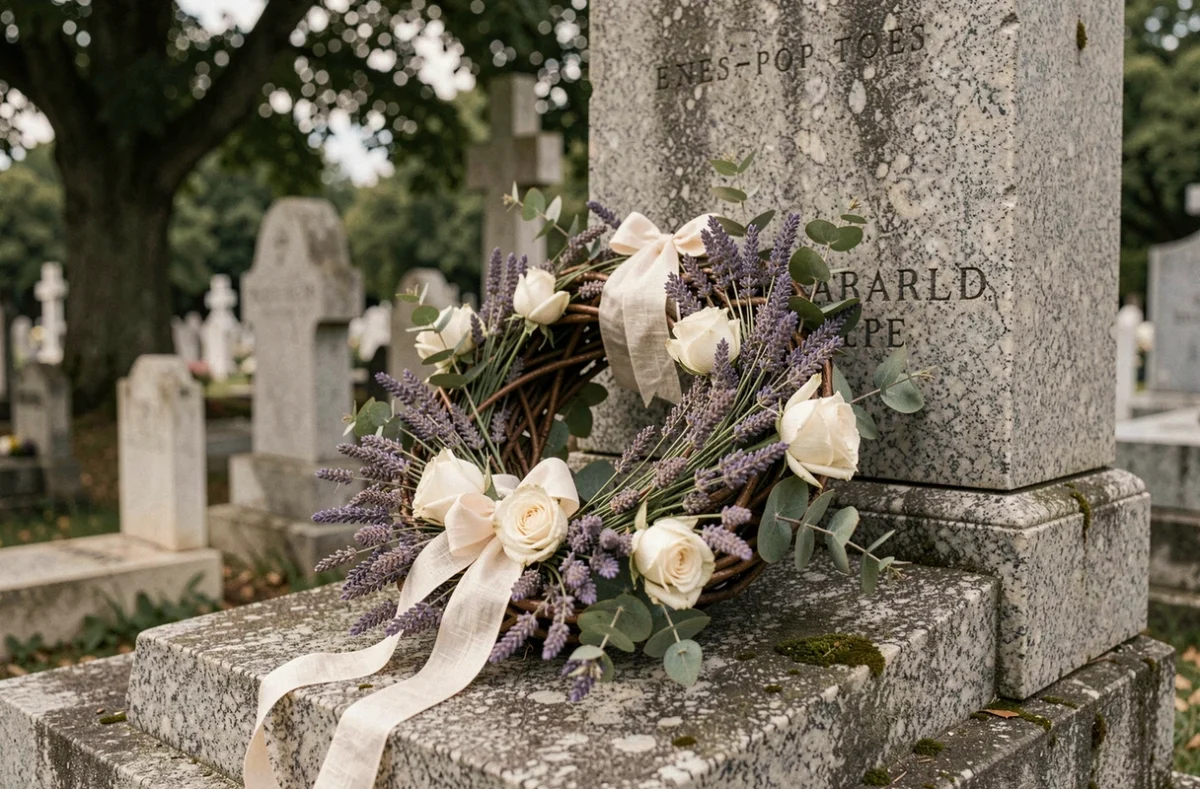
A funeral decoration refers to any element added to a grave to visually distinguish it and honor the memory of the deceased. Beyond traditional floral arrangements, families today have materials, engraving techniques, and shapes that allow them to adapt each grave to a specific personality. The choice depends on three concrete parameters: the cemetery regulations, the material’s resistance to weather, and the level of maintenance that relatives can ensure over time.
Cemetery Regulations: What Conditions Every Grave Decoration
Before choosing an ornament, the cemetery’s internal regulations set the framework. Municipalities regulate plantings, items placed, and interventions on graves. In Paris, for example, plantings must remain within the limits of the concession, and items cannot obstruct the pathways.
Consulting this regulation at the town hall avoids costly surprises. An element affixed to the monument without authorization can be removed by municipal services. Each cemetery applies its own restrictions, including on the height of headstones or the types of materials allowed.
Another often-overlooked constraint: the use of phytosanitary products has been prohibited in cemeteries since July 1, 2022, following the extension of the Labbé law. Therefore, a plant decoration must do without chemical herbicides, which directs choices towards plants suited to the local climate, mineral mulching, or strictly manual maintenance.
When looking for funeral decoration ideas suitable for a specific grave, these regulatory and practical constraints serve as the first selection filter.
Durable Materials for Funeral Ornaments: Granite, Ceramic, and Steel
The material determines the longevity of the ornament and its aesthetic aging. Three families stand out for their resistance to freeze-thaw cycles, UV rays, and moisture.
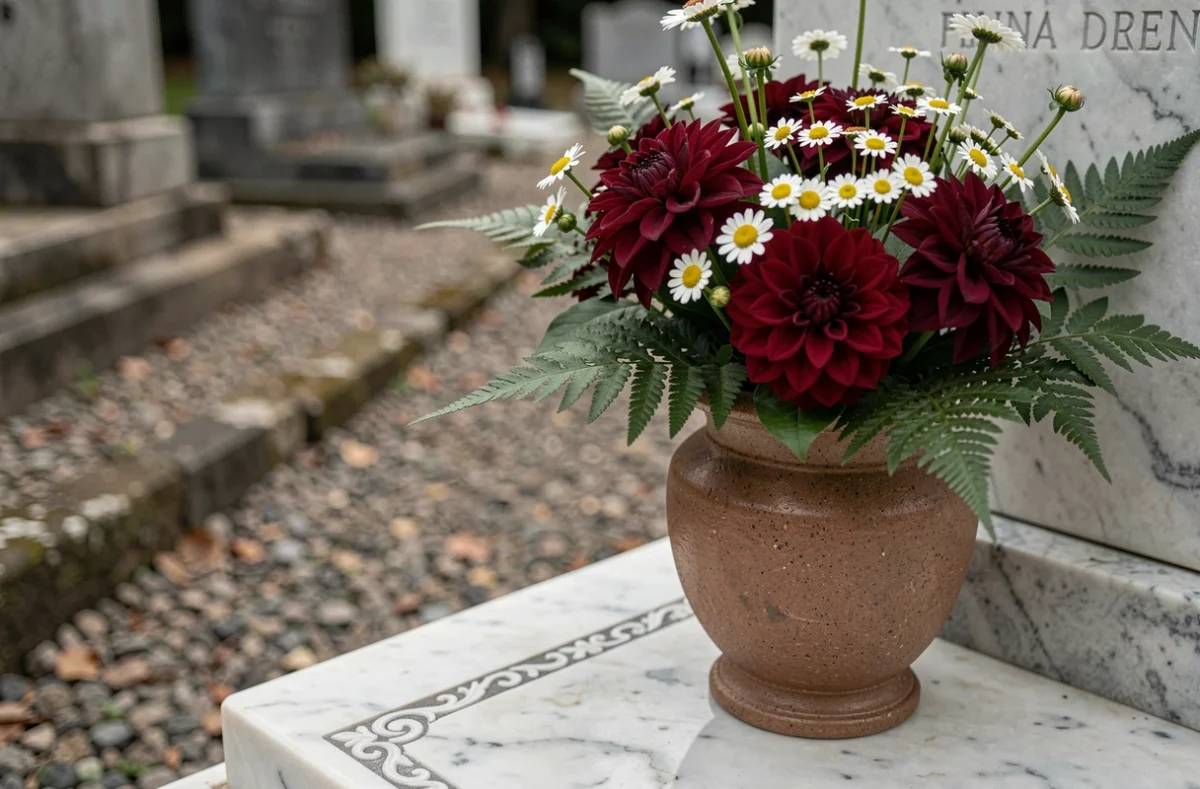
Solid Granite for Grave Markers and Funeral Vases
Granite remains the reference material in funeral art. Its density makes it almost impervious to the elements. A granite grave marker retains its legibility for decades without any special surface treatment.
Finishes vary: polished for a solemn appearance, bush-hammered for a raw texture, and flame-finished for a natural look. Granite can accommodate both mechanical engraving and hand engraving, the latter adding an artisanal dimension to each piece.
Ceramic and Personalized Medallions
Glazed ceramic allows for the reproduction of a portrait, landscape, or symbolic pattern with a color fidelity that granite cannot achieve. A ceramic medallion resists UV rays without fading when the glaze is fired at high temperatures.
This medium is particularly suitable for families who wish to incorporate a photograph of the deceased or a detailed figurative motif. The compact format of the medallion fits most monuments, including the more modest ones.
Steel Headstones and Ornaments
Steel (stainless or Corten) represents a contemporary alternative. Stainless steel maintains its shine without maintenance. Corten steel develops a stable rust patina that protects the metal deeply. These headstones offer clean lines and geometric cutouts that are impossible to achieve in stone.
Steel allows for openwork shapes and cut silhouettes that create a play of shadows on the gravestone, a visual effect that traditional materials do not produce.
Engraving and Symbols: Personalizing the Funeral Monument Beyond Text
Engraving is the most enduring way to personalize a grave. Two techniques coexist:
- Mechanical engraving (sandblasting or laser) offers perfect uniformity and is suitable for long texts, dates, and geometrical patterns reproduced in series.
- Hand engraving, done with a chisel by an artisan, gives a slightly irregular stroke that imparts a unique character to each letter. This technique is slower and more expensive, but it transforms the plaque into a handcrafted piece.
- Gold leaf engraving, applied after incision, adds a luminous contrast that remains visible even in overcast weather. It requires refreshing every few years depending on exposure.
The choice of engraved symbol deserves consideration. Beyond the cross or dove, some families opt for a tree (symbol of life), a marine anchor (hope), a musical instrument, or a motif related to the deceased’s passion. The engraved symbol tells a story without needing words.
Seasonal or Permanent Decoration: Adapting the Choice to Distance
The question of maintenance separates two approaches. Families living near the cemetery may choose living plant compositions, renewed each season. National texts do not set a mandatory frequency for flowering, but the ongoing maintenance of the concession falls to the heirs.
For families living far away, a permanent or semi-permanent decoration proves more realistic. Several solutions limit interventions:
- Ceramic or high-density resin flowers mimic natural petals without wilting. Their durability varies depending on the quality of the material, with hand-painted models offering a more faithful appearance.
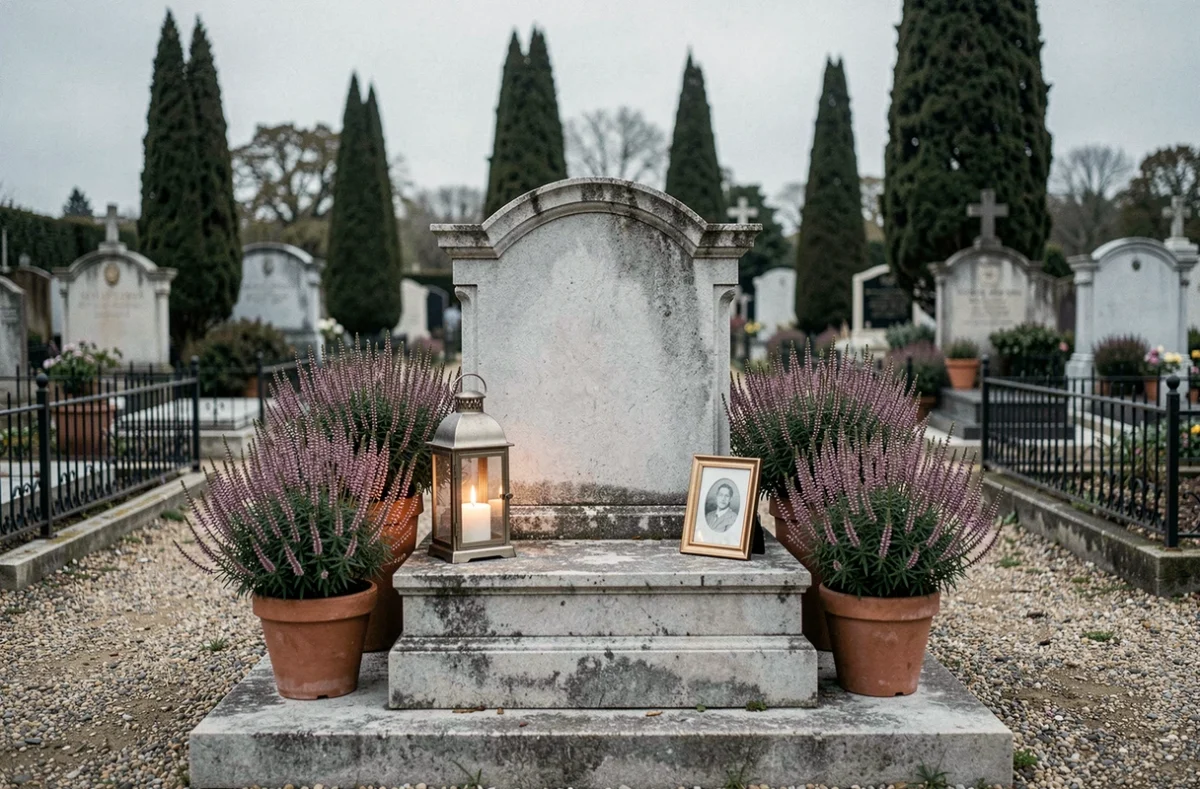
- Solar lanterns made of stainless steel or frosted glass light up automatically at dusk. They provide a luminous presence without wiring or batteries that need frequent replacement.
- Mineral mulching (pebbles, marble gravel, pumice) dresses the grave planter without requiring plant maintenance. It also limits the growth of weeds, avoiding the need for a prohibited herbicide.
A well-thought-out ephemeral decoration is better than a neglected permanent arrangement. Removable ornaments (magnetic plaques, freestanding vases) allow for renewing the decor during each visit without heavy intervention on the monument.
The personalization of a grave relies less on the quantity of objects than on their coherence with the memory of the deceased. A single well-chosen element, whether it is a ceramic medallion, hand engraving, or a solar lantern, is often enough to transform an anonymous grave into a unique place of memory.