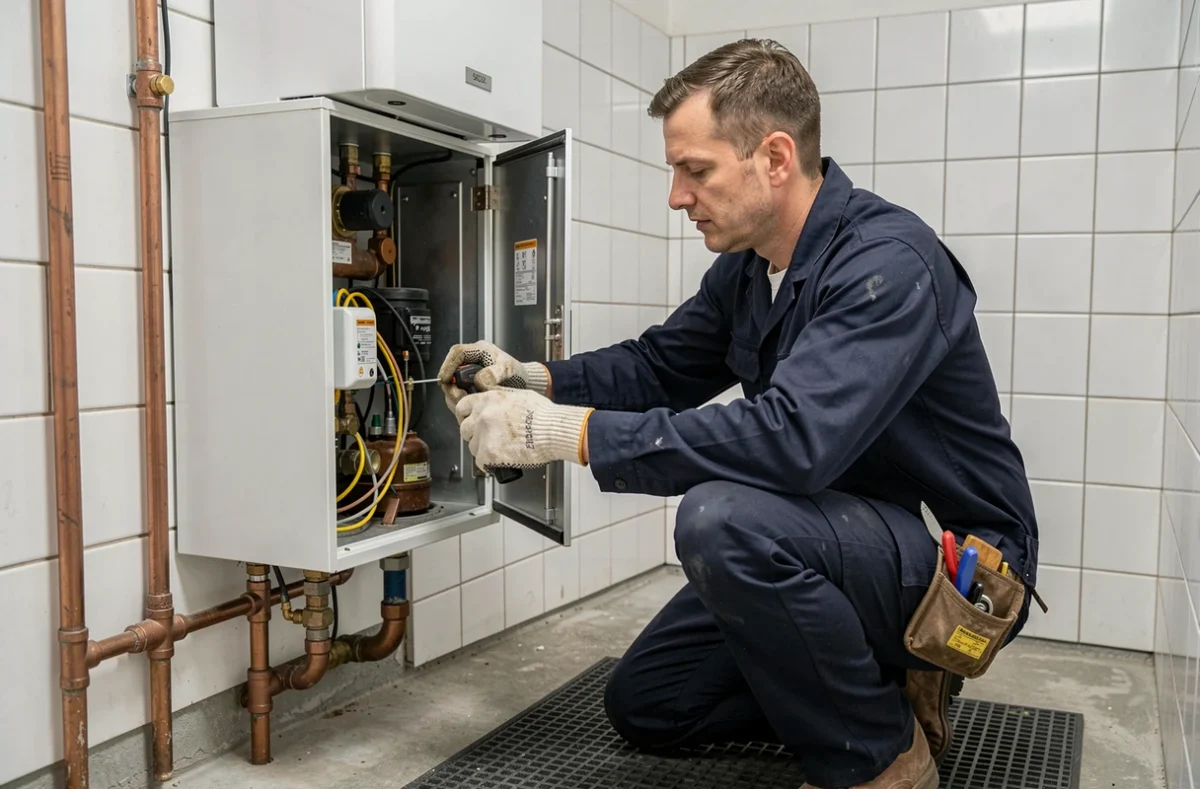
A boiler breakdown is characterized by a complete stop of the device, a lack of hot water, or an error code displayed on the control panel. Before contacting a professional, several checks can help identify the cause of the problem and avoid unnecessary intervention. The type of fuel (gas, oil, electricity) determines the actions to be taken and the associated risks.
Pressure and supply: checks to make before any call
The majority of boiler breakdowns do not require disassembly. They result from an external parameter that the heating technician could correct in a few minutes, but that you can check yourself.
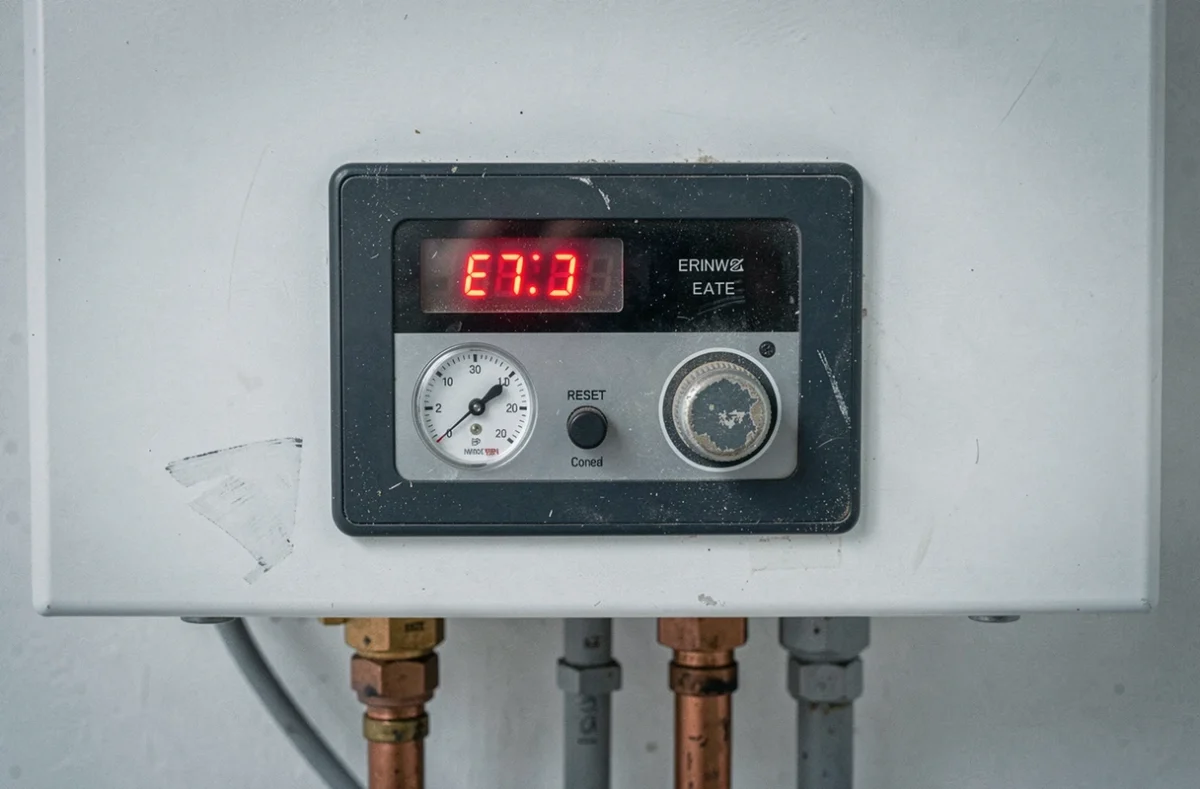
The first reflex concerns the heating circuit pressure. The pressure gauge, located on the front of the device, should display a value between 1 and 1.5 bar when cold. If the needle has fallen below this threshold, open the filling valve until you reach the correct range, then close it. A recurring loss of pressure indicates a leak in the circuit or a faulty expansion tank.
Next, check the energy supply. For a gas boiler, ensure that the gas supply valve is open and that there is no network outage. For an oil-fired device, check the level of the tank. For an electric boiler, check the circuit breaker dedicated to the electrical panel. Knowing what to do in case of a boiler breakdown starts with these simple steps that eliminate the most common causes.
If the device displays an error code, note it down. This code directly guides the heating technician to the faulty component (sensor, valve, electronic board) and reduces the duration of the intervention.
Gas and carbon monoxide safety: non-negotiable actions
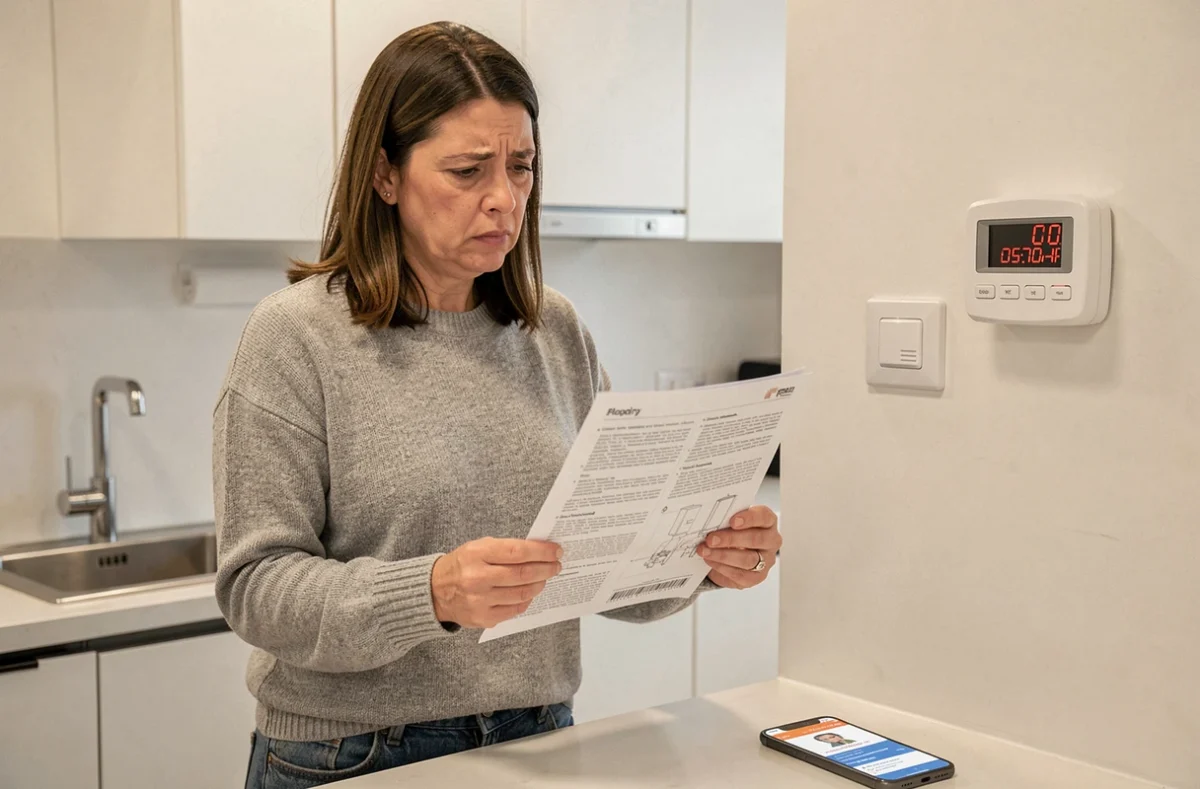
Any breakdown on a gas or oil boiler requires a safety reflex before any attempt to restart. A faulty combustion can produce carbon monoxide, an invisible and odorless gas whose inhalation can be fatal.
- If you detect a gas smell, immediately turn off the main supply valve, ventilate by opening the windows, and leave the premises without operating any electrical switches.
- If occupants experience headaches, nausea, or dizziness while the boiler is running, suspect a carbon monoxide leak and evacuate before alerting the emergency services.
- In case of visible water leakage at the boiler or connections, turn off the water and energy supply to the device to limit damage.
Carbon monoxide monitoring is part of the mandatory diagnosis carried out during annual maintenance. During a repair, the professional must measure this parameter, and they can require the shutdown of the device until the flue gas evacuation is corrected.
Annual boiler maintenance: what regulations require
A breakdown is often a symptom of neglected maintenance. For boilers ranging from 4 to 400 kW powered by gaseous, liquid, or solid fuel, maintenance must be performed every calendar year, and not over a rolling twelve-month period. Therefore, maintenance performed in December does not automatically cover the following year.
After a boiler installation or replacement, the first maintenance must occur no later than the calendar year following the commissioning. This rule is defined by articles R.224-41-4 to R.224-41-9 of the Environmental Code.
Maintenance certificate: a document to keep
The professional is required to provide a maintenance certificate within fifteen days following their visit. This document must be kept for at least two years by the client. It serves as proof in case of disputes with a landlord, an insurer, or the administration.
Without this certificate, a tenant may be held responsible for the repair costs of a breakdown that would normally have been the owner’s responsibility. Keeping it in an accessible file (paper or digital) avoids many complications.
Boiler repair: choosing the right professional and anticipating costs
When basic checks yield no results and the breakdown persists, calling a qualified heating technician becomes the only reasonable option. Working on the gas circuit, disassembling a burner, or replacing an electronic board without expertise poses serious risks and may void the manufacturer’s warranty.
Maintenance contract or one-time intervention
An annual maintenance contract generally includes the mandatory visit, cleaning of components, and a limited number of repairs. The annual cost is set in advance, which avoids surprises in case of a winter breakdown. Without a contract, one-time repairs are billed at the professional’s hourly rate, plus the cost of spare parts and possibly an additional fee for emergency or out-of-hours intervention.
Before approving an intervention, request a written estimate. A serious professional will detail the diagnosis, the parts to be replaced, and the estimated time. Compare with a second opinion if the amount exceeds several hundred euros, especially for an older device where complete replacement may be more cost-effective.
- Check that the heating technician has a recognized qualification (RGE mention for interventions on the gas circuit or heating system).
- Ask if the intervention is covered by your maintenance contract before approving a separate estimate.
- Consult your home insurance: some contracts include repair assistance with partial coverage of costs.
For a boiler over fifteen years old, repeated breakdowns often signal the end of the device’s life. In this case, investing in a newer heating system, whether condensing or hybrid, reduces both the frequency of breakdowns and energy consumption.
The most useful reflex in the face of a breakdown is to avoid improvisation. Turning off the supply, noting the error code, checking the circuit pressure, and contacting a qualified professional cover almost all situations without worsening the problem.