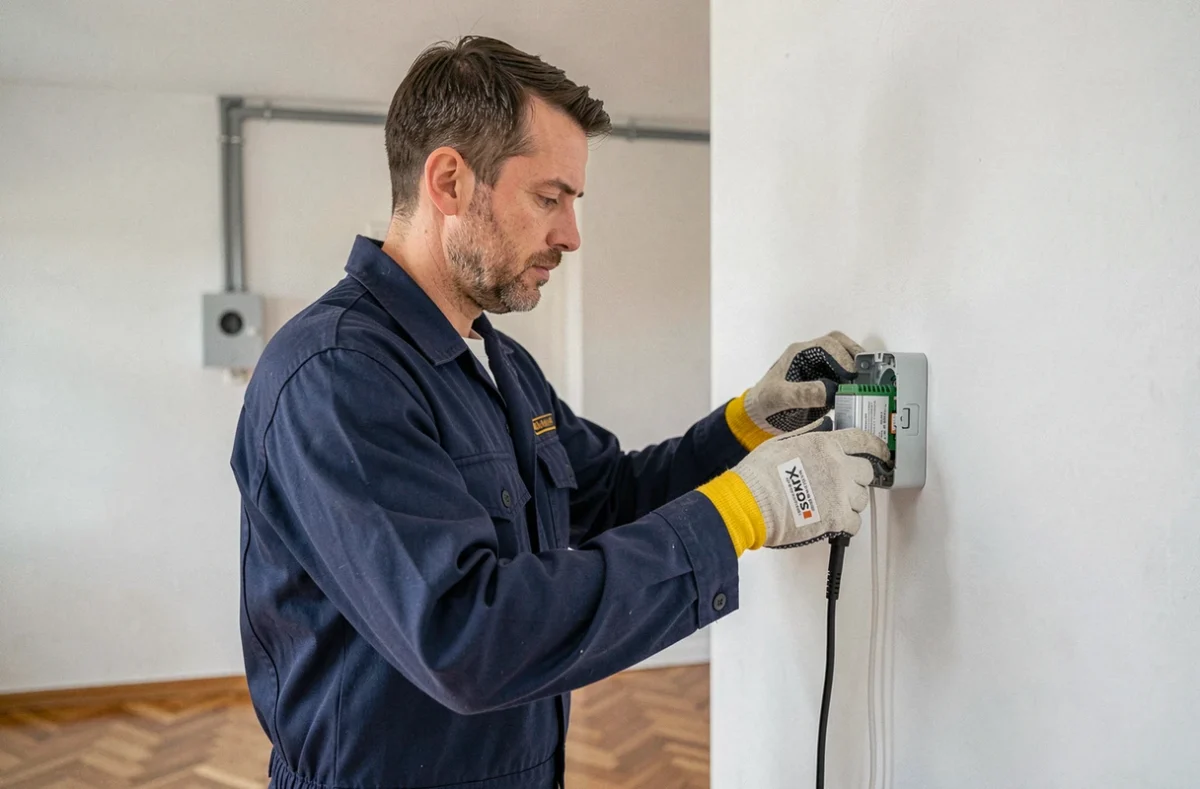
The Yokis two-way installation relies on a radio transmitter-receiver pair that replaces traditional wired connections between two control points. The challenge lies not in pairing the modules but in preparing the existing circuit and adhering to the applicable regulatory requirements for the site.
Neutral wire at the control point: check before ordering the Yokis kit
A Yokis receiver micromodule (type MTR) requires a neutral wire to operate. In homes built before the 1990s, the neutral is rarely run to the switch’s junction box. We observe that this point remains the primary cause of failure or additional costs on a radio retrofit project.
Two options are available. Run a neutral from the nearest junction box, which involves cutting a groove or using a molding. Or relocate the receiver to the light fixture, where phase and neutral already coexist. This second approach works if the DCL box provides enough depth to accommodate the module.
Checking the compliance of the work according to the manufacturer also involves sizing the upstream circuit breaker: the lighting circuit must be protected by an appropriate circuit breaker and a differential that complies with current regulations.
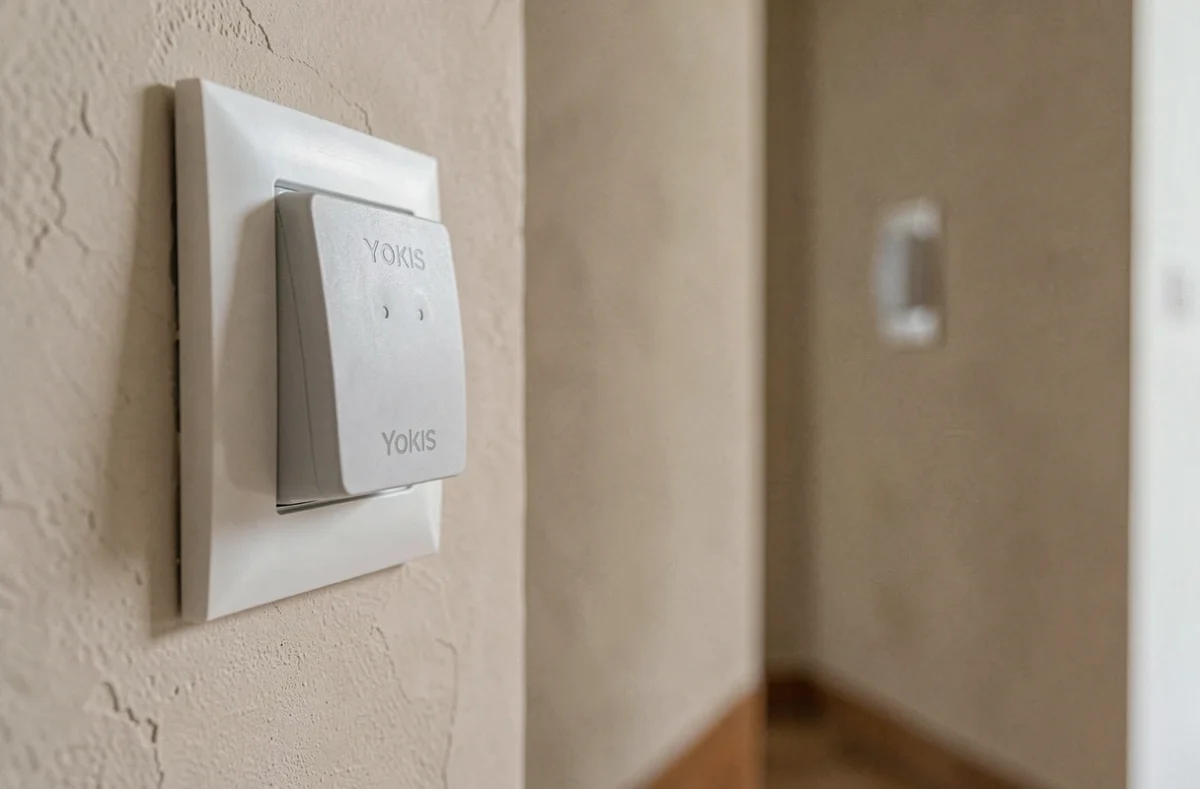
Wiring diagram for Yokis two-way radio: MTR receiver and wall transmitters
The principle is simple on paper. The MTR receiver cuts off or powers the load, controlled by one or more wireless wall-mounted radio transmitters. Each transmitter operates on battery or wired push-button, depending on the chosen model.
Wiring the MTR receiver
The receiver connects at four points: phase (L), neutral (N), load output, and neutral return from the light fixture. The module fits into a junction box with a minimum depth of 40 mm. The 30 mm boxes found in older buildings are insufficient, and their replacement must be included in the estimate.
Pairing the transmitters
The pairing between transmitter and receiver follows a sequence specific to each Yokis reference. We recommend proceeding module by module, cutting power between each pairing to avoid radio address conflicts. In home automation centralization, each transmitter can control multiple receivers, but the effective radio range indoors depends on the thickness of the walls and the presence of metal structures.
- Wall-mounted radio transmitter (type E2BP): fixed by screws or adhesive, no wired power required, announced range in free field rarely achieved in dense buildings
- Wired push-button connected to an input of the MTR: hybrid solution that retains a traditional embedded switch while passing through the radio receiver
- Portable remote control or home automation scenario: additional control via a Yokis gateway for multi-zone installations
NF C 15-100 edition 2024 and radio micromodules: what applies in 2026
CONSUEL applies the 2024 edition of NF C 15-100 by default since April 1, 2026. This information changes the game for projects submitted after this date. The new edition replaced the previous monolithic presentation with a series of thematic documents.
In partial renovation, only the circuits created or modified must comply with the current edition’s requirements. If you add a Yokis micromodule to an existing lighting circuit without modifying the upstream wiring, the circuit retains its original regulatory status. However, a significant extension or total renovation shifts the entire project to the 2024 edition.
This distinction is crucial for the budget. A simple addition of a radio receiver in an existing box does not trigger a global compliance requirement. But if the electrician runs an additional neutral or replaces a distribution board, the regulatory scope expands.
Protection of the circuit upstream of the module
Compliance does not solely depend on the connection of the Yokis module, but on the entire protection chain. The circuit breaker for the lighting circuit, the differential, and the cable size must meet applicable requirements. A radio module correctly paired on a poorly protected circuit remains non-compliant.
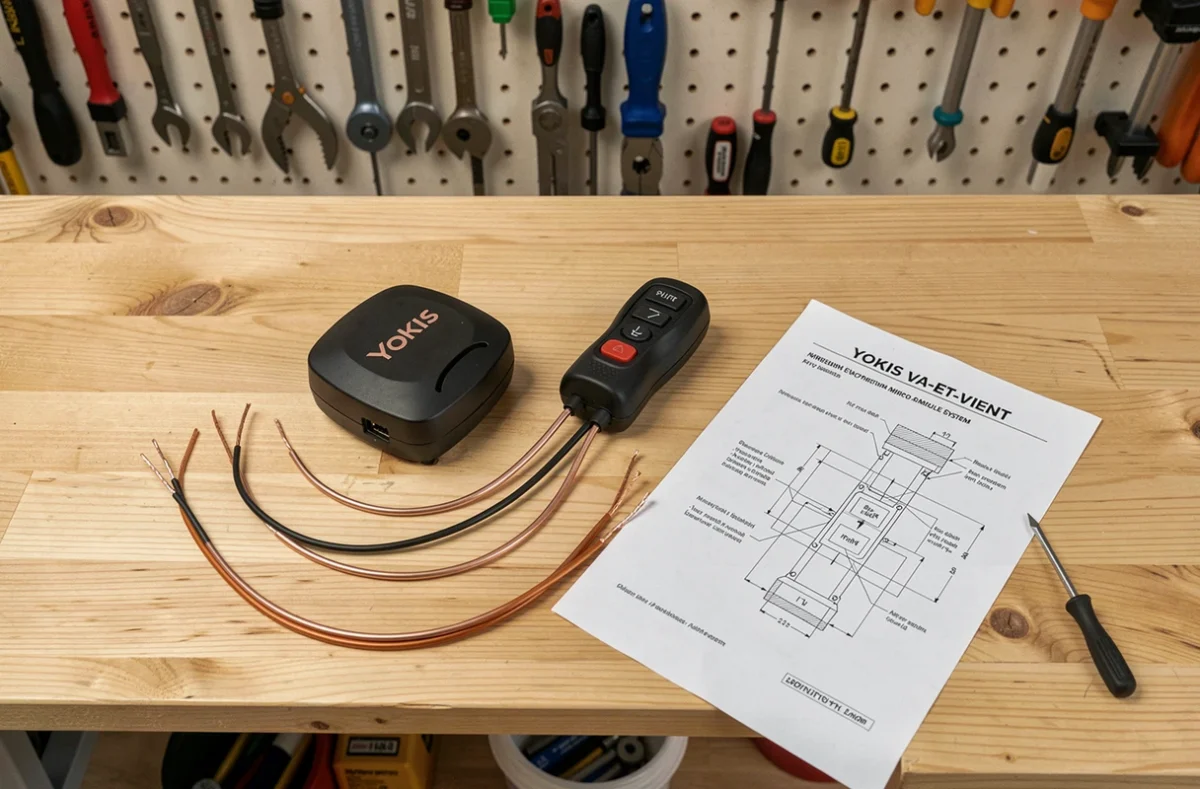
Yokis two-way kit or separate components: decide based on the project
The Yokis radio kit (often referred to as the “Power two-way kit”) includes an MTR receiver and two transmitters. This pack is suitable for standard configurations where the neutral is accessible and the boxes are deep enough.
Outside of this ideal case, purchasing separate components offers more flexibility. The choice of transmitter type (battery, wired, embedded) is made point by point, and the receiver can be selected based on the load’s power.
- Complete kit: quick solution if the existing wiring is compatible, controlled material cost, only one pairing to perform
- Separate components: adaptation to the existing structure, possibility to mix radio transmitters and wired push-buttons, choice of receiver based on the actual power of the light fixture
- Classic wired re-cabling: remains relevant when running jumpers between switches poses no difficulty (hollow walls, accessible conduits)
The break-even point for the radio solution is where the cost of running cables exceeds the price of the kit and its installation. In older buildings with stone walls or concrete slabs, the savings are clear. In a wooden frame construction with waiting conduits, wired re-cabling often remains cheaper.
Installation cost by an electrician: the real variables
The installation rate for a Yokis two-way setup varies according to three main factors: the presence or absence of a neutral at the control point, the depth of the junction boxes, and whether or not intervention on the electrical panel is necessary.
A favorable scenario (neutral present, 40 mm box, circuit properly protected) is limited to installing the receiver, fixing the transmitters, and pairing. The intervention time remains modest.
An unfavorable scenario (neutral absent, 30 mm box, differential to be replaced) multiplies the labor time. Running the neutral often represents the largest part of the bill, more than the Yokis equipment itself. We recommend requesting a preliminary diagnosis of the control point before ordering any equipment, to avoid an unusable kit as is.
The choice between a general electrician and an installer trained in Yokis home automation solutions can also weigh in. Mastery of the pairing procedure and knowledge of radio range constraints reduce intervention time and callbacks on site.