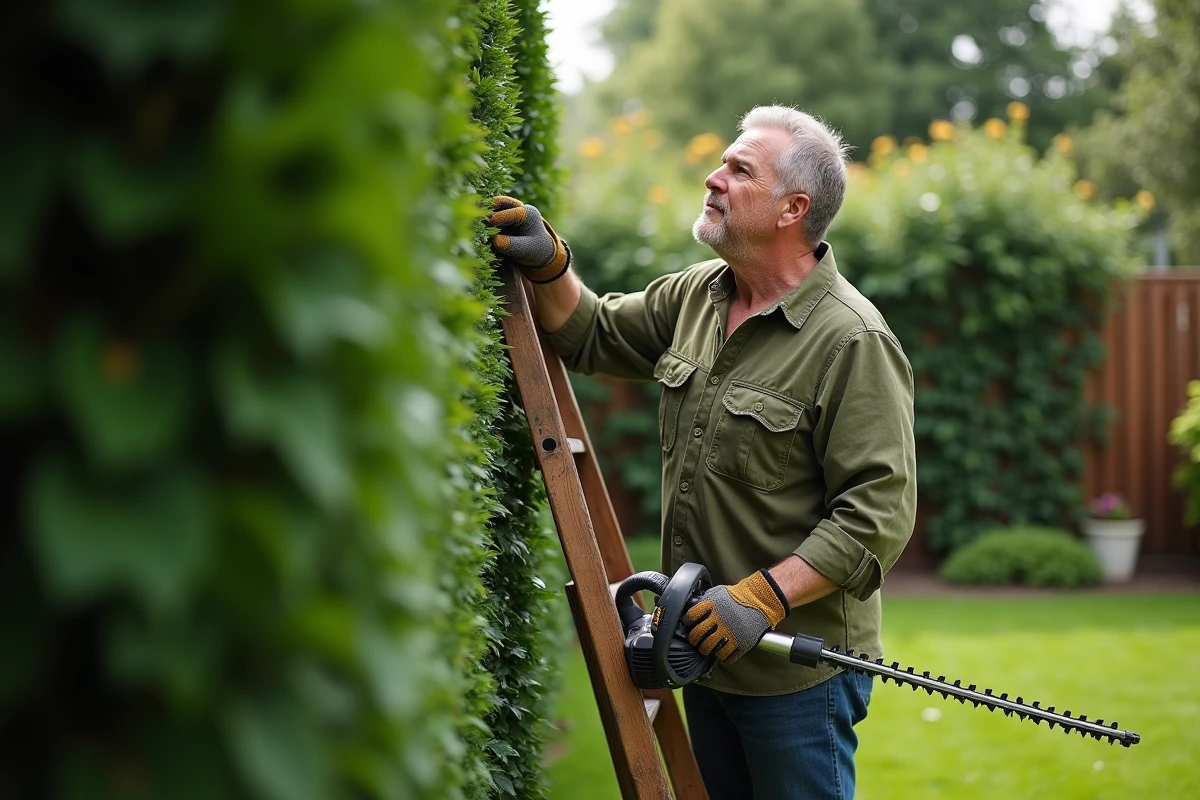
Trimming the top of a hedge of thujas that exceeds three meters, from the ground, without a ladder: this is the promise of the telescopic hedge trimmer. In practice, the choice of the right model depends less on the technical specifications than on the actual configuration of your hedge, your working posture, and the duration of the trimming sessions.
Fatigue and posture: the real criterion that product sheets ignore
One first thinks of power or blade length. In practice, it is the weight distribution on the pole that determines comfort after twenty minutes of working at height. A telescopic hedge trimmer is operated with arms raised, often at an inclined cutting angle. Every additional hundred grams is felt in the shoulders and neck.
Feedback from professional gardeners published in recent years confirms this point: beyond a certain pole length, muscle fatigue increases disproportionately, even on battery models known to be lightweight. A shoulder harness, sometimes supplied as an option, radically changes the experience. Before purchasing, check if the manufacturer offers this accessory or if the attachment is compatible with a universal harness.
To compare models from this specific angle, the detailed sheets available on taille-haie-telescopique.com allow you to cross-reference weight, extended length, and comfort features.
Battery, gas, or corded: choose according to the hedge, not according to fashion
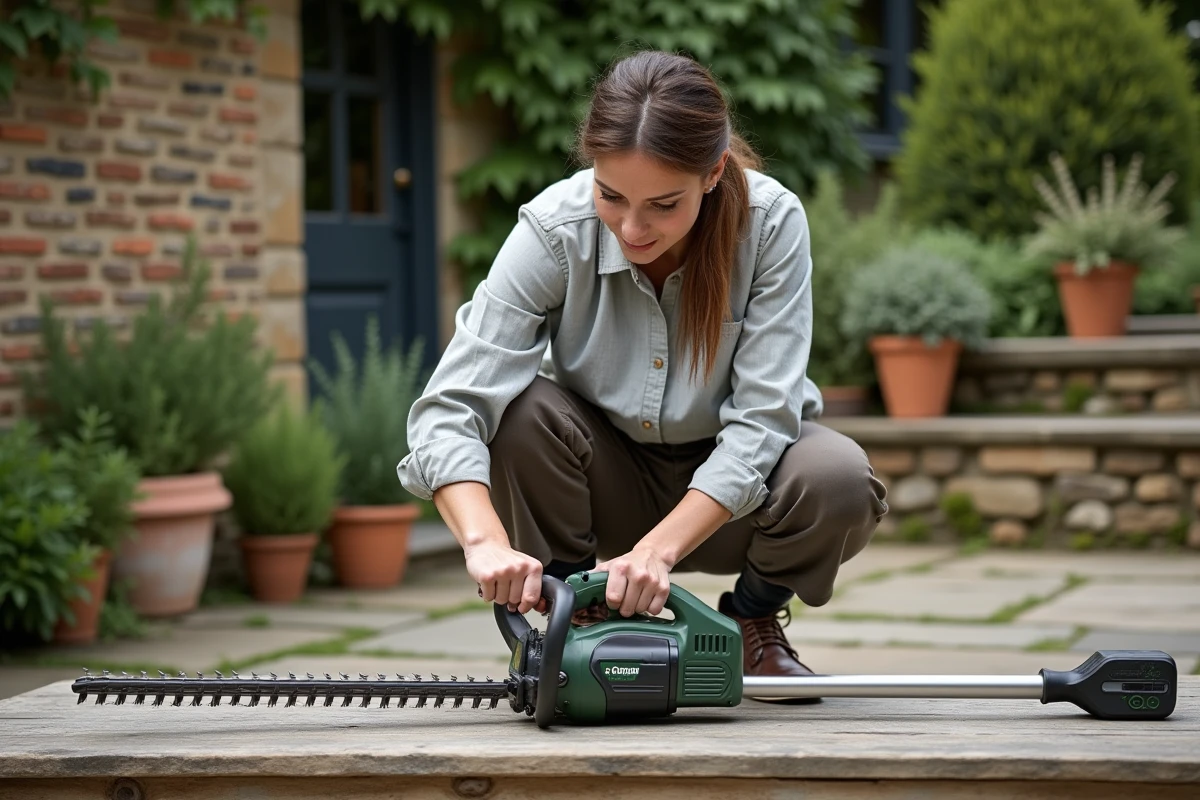
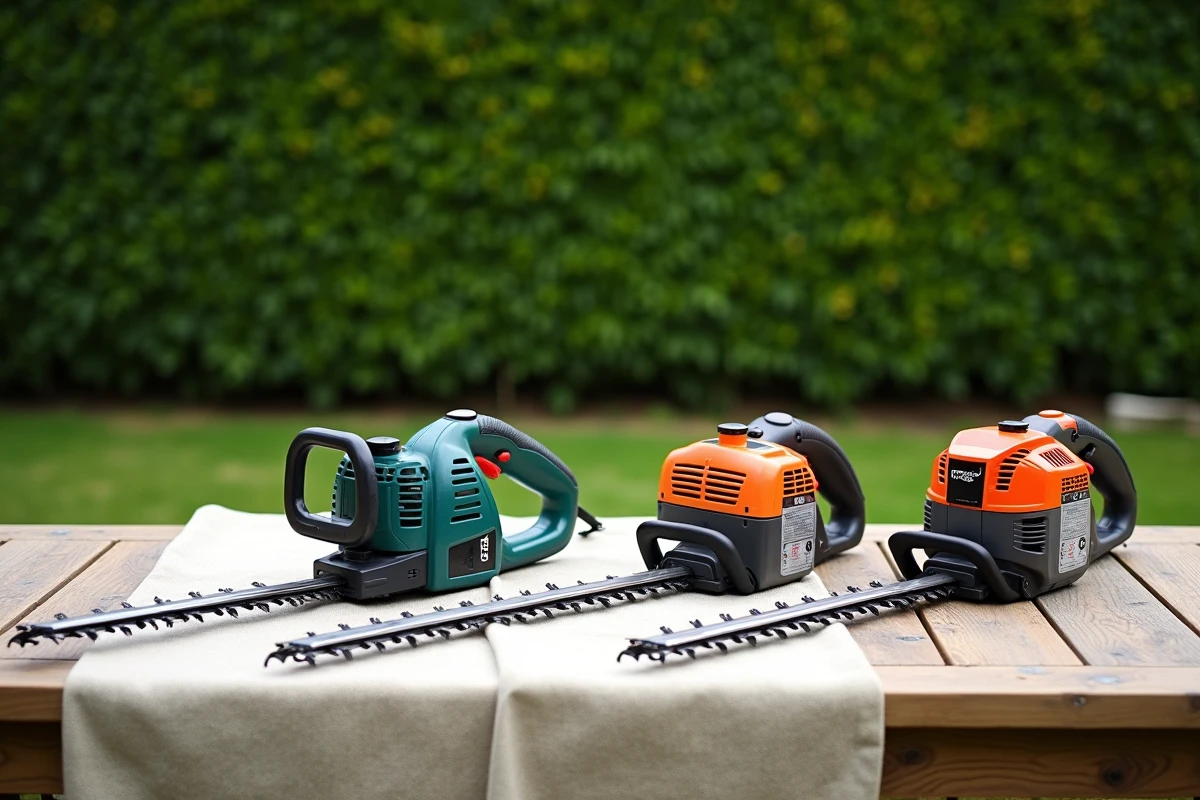
The battery-powered telescopic hedge trimmer dominates the shelves. It has a real advantage for urban or shared gardens: a significantly lower noise level than gas models. Some municipalities even restrict the hours of use for noisy tools by municipal order, mainly targeting gas engines. In co-ownership, cordless models avoid neighborhood conflicts.
The gas model remains relevant for long, dense, and old hedges, where the autonomy of a standard battery does not cover the entire session. A gas pole hedge trimmer runs as long as there is fuel, without a drop in power at the end of the tank.
Battery sharing: a often overlooked point
If you already own a battery-powered garden tool (chainsaw, blower, mower), check the compatibility of the platform. Brands like Ryobi, Husqvarna, or Stihl offer ranges where the same battery powers multiple tools. The savings are real: the battery often represents the most expensive part of the whole. Buying a telescopic hedge trimmer in a “bare tool” version (without battery or charger) significantly reduces the bill.
- Before purchasing, list the battery-powered garden tools you already own and note the brand and voltage of the platform.
- Compare the price of the complete kit (tool + battery + charger) with the price of the bare tool alone to measure the actual savings.
- Check that the existing battery offers sufficient capacity for the telescopic hedge trimmer (long poles require more energy than a handheld tool).
Blade length and tooth spacing: adapt the tool to the thickness of the branches
The length of the blade determines the cutting width in a single pass. For a narrow hedge of privet or boxwood, a short blade is sufficient and remains more manageable at height. On a hedge of laurels or hornbeams that has thickened, a longer blade speeds up the work.
The spacing of the teeth determines the maximum diameter of branches that can be cut. A wide spacing is suitable for semi-abandoned hedges with hard wood. A narrow spacing produces a cleaner cut on tender shoots but gets stuck on thick branches. Feedback varies on this point depending on the species: the same spacing may work perfectly on thuja and struggle on beech.
Adjustable head: a concrete advantage for the top of the hedge
On a telescopic hedge trimmer, the adjustable head allows you to trim the top of the hedge flat without raising your arms above your head. In practice, you set the angle once and move sideways. Without this function, you have to compensate with your body, which accelerates fatigue and degrades the regularity of the cut.
Prefer an angle adjustment system with several fixed positions rather than a free clamp that can slip under vibrations.
Local regulations and trimming period: two constraints to consider
The French Office for Biodiversity recommends avoiding hedge trimming from March 15 to July 31, during the bird nesting period. This recommendation, increasingly echoed by municipalities, sometimes comes with binding local orders.
For the battery-powered telescopic hedge trimmer, also check the hours authorized by your town hall for gardening work. Even though cordless models are quieter, certain time slots remain prohibited on weekends and public holidays.
- Consult your municipality’s municipal order on gardening hours before planning your sessions.
- Respect the recommended nesting period (March 15 to July 31) to preserve biodiversity.
- In co-ownership, check the internal regulations, which may impose additional restrictions.
The choice of a telescopic hedge trimmer ultimately hinges on three concrete points: the perceived weight in the working position, battery compatibility with your existing tools, and the suitability of the tooth spacing to the actual thickness of your hedge. Testing the tool in-store, with the pole extended and arms raised for a minute, remains the best filter before making any purchase decision.