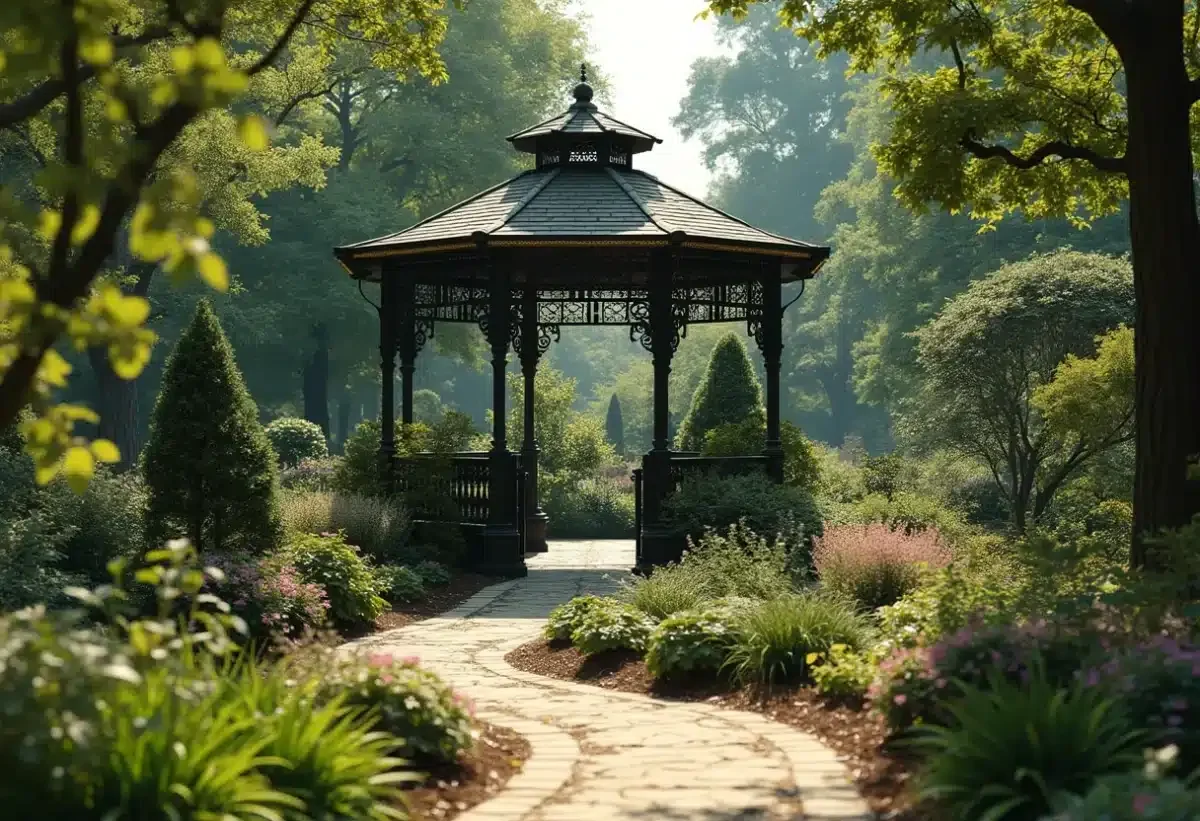
Period garden structures, such as pavilions, kiosks, and pergolas, evoke a time when aesthetics and functionality harmoniously combined. However, restoring or erecting these historical constructions requires a deep understanding of specific regulations.
Indeed, many period garden structures are protected by strict heritage laws. These regulations aim to preserve the authentic character of historic gardens while ensuring their architectural integrity. Owners and enthusiasts must therefore navigate between legal requirements and restoration techniques to successfully revive these jewels of the past.
Specific Regulations for Period Garden Structures
Understanding the regulations applicable to a garden shed built before 2000 or other structures such as pavilions and pergolas is essential for any owner wishing to preserve the authenticity of a historic garden. These constructions are often subject to strict laws, particularly in protected areas.
Heritage Laws
Pavilions, pergolas, and greenhouses are governed by specific regulations aimed at preserving their architectural integrity and historical value. The Florence Charter, developed by Icomos/IFLA with the contribution of René Pechère, constitutes a major foundation. Inspired by the Venice Charter, it lays the groundwork for the conservation of historic gardens.
Local Constraints
Garden structures, including sheds, are also subject to local regulations. These standards may vary depending on the classification of the land as buildable or not, and the listing of the site in a protected area often imposes additional restrictions.
- A garden shed is subject to urban planning legislation.
- Local regulations apply to all modifications of existing structures.
- In protected areas, specific permits may be required.
Iconic Examples
The Tuileries Gardens, created by Pascal Cribier, Louis Benech, and François Roubaud, or the Rodin Museum restored by Jacques Sgard, illustrate how conservation and regulation play a fundamental role. These historic sites are regularly subject to inspections to ensure their preservation.
In France, cities like Paris, Versailles, or Marseille house many historic gardens where every modification is scrutinized against heritage regulations. Expertise and adherence to standards are essential to maintain the harmony and beauty of these unique spaces.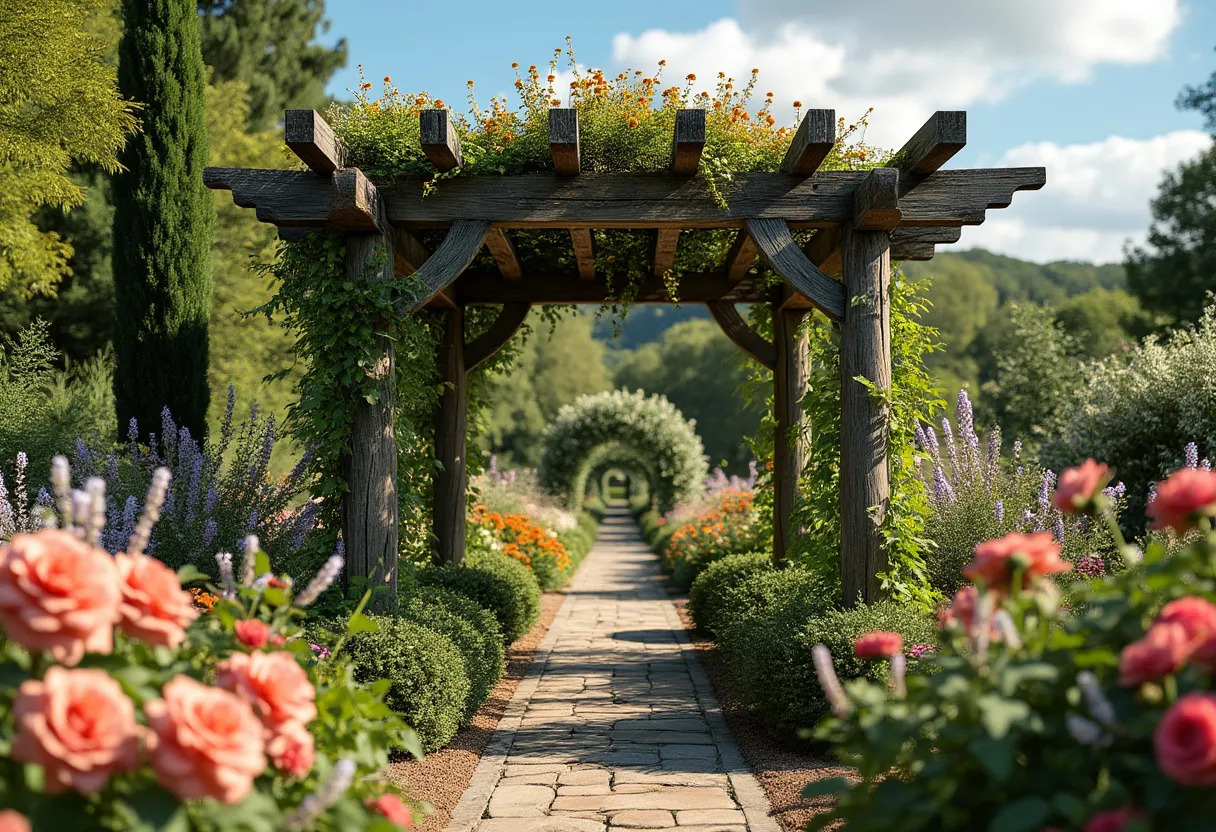
Administrative Procedures and Tax Implications for Period Garden Structures
Owners of period garden structures must follow certain administrative procedures before undertaking any work. Obtaining urban planning permits is a crucial first step. These permits are issued by the town hall, based on the Local Urban Planning Plan (PLU). The rules of the PLU vary by municipality and may impose specific restrictions in protected areas.
The installation or modification of a garden structure, such as a pergola, pavilion, or greenhouse, may also lead to tax implications. For example, the construction of a garden shed may be subject to the development tax. This tax, included in local taxes, is managed by the tax administration and varies according to the size and location of the structure.
For gardens classified as historic monuments, it is possible to benefit from financial support. The Ministry of Culture oversees these schemes through the Regional Directorate of Cultural Affairs (DRAC) and the National Commission for Heritage and Architecture (CNPA). The DRAC collaborates with the Regional Commission for Heritage and Architecture (CRPA) to evaluate projects.
The Incentive and Partnership Fund (SPI), created by the Ministry of Culture, offers grants for the preservation of historic gardens. Owners may also benefit from tax deductions according to the General Tax Code (articles 156 and 199 duovicies). These advantages are reserved for expenses related to the restoration and maintenance of classified structures.