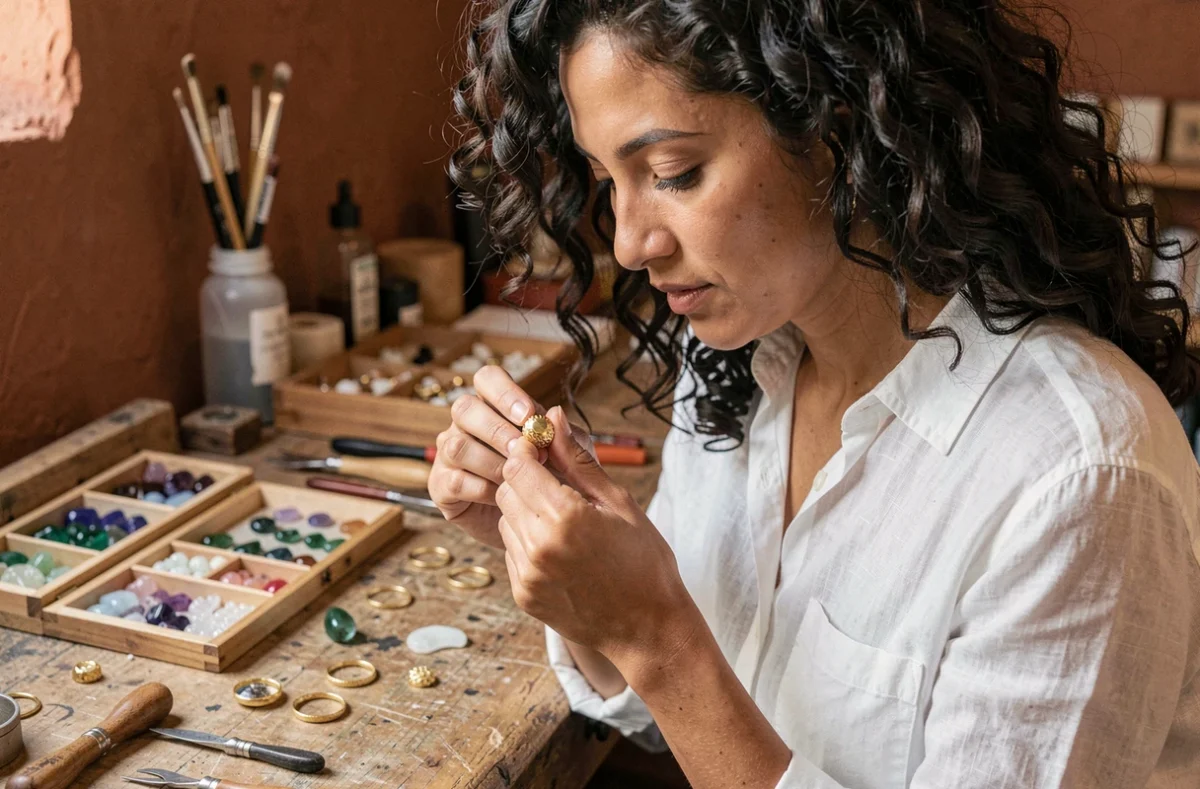
With the multiplication of labels, recent European regulatory requirements, and the evolution of materials, choosing a handmade jewelry piece is no longer just a matter of taste. What concrete criteria separate a reliable handmade piece from a costume jewelry item whose finish deteriorates in a few weeks? This is what the current trends in handmade jewelry allow us to measure, provided we look beyond shapes and colors.
Nickel Release and REACH Compliance: What Handmade Jewelry Must Meet
The European REACH regulation sets a nickel release limit of 0.5 µg/cm² per week for jewelry in prolonged contact with the skin. For pieces intended for pierced areas (earrings, piercings), this threshold drops to 0.2 µg/cm² per week.
Controls rely on standards EN 1811:2023 for release and EN 12472:2020 to simulate the wear of plated jewelry. The mention of “hypoallergenic” on a product sheet does not demonstrate compliance. Only the results of standardized tests can do that.
This technical point distinguishes artisans who document their sourcing from those who rely solely on marketing arguments. The catalogs available on bijoux-aurea.fr illustrate this approach, where the choice of materials precedes aesthetic work.
| Criterion | REACH Regulatory Threshold | Reference Standard |
|---|---|---|
| Nickel Released (skin contact) | 0.5 µg/cm²/week | EN 1811:2023 |
| Nickel Released (pierced parts) | 0.2 µg/cm²/week | EN 1811:2023 |
| Wear Resistance (plated) | Corrosion simulation | EN 12472:2020 |
These thresholds do not only apply to large brands. A handmade workshop selling its rings, bracelets, or earrings online is subject to the same obligations as an industrial manufacturer.
GPSR Regulation and Traceability of Handmade Jewelry
Since December 13, 2024, the European regulation (EU) 2023/988, known as GPSR, strengthens safety obligations for all consumer products, including handmade jewelry. Every creator must conduct a risk assessment and provide information to identify the manufacturer and the product.
For a workshop that produces necklaces, earrings, or bracelets in small series, this concretely translates into the retention of supplier certificates, batch references, and compliance files. Traceability is no longer a competitive advantage: it is a legal obligation.
Handmade Jewelry for Children: A Special Case
Pieces intended for children undergo stricter scrutiny. The nickel release thresholds apply with the same rigor, but material traceability becomes a differentiating criterion visible to parents. A creator capable of documenting the origin of their stones, brass, or recycled silver stands out significantly in this segment.
Material and Style Trends: What is Changing in Handmade Collections
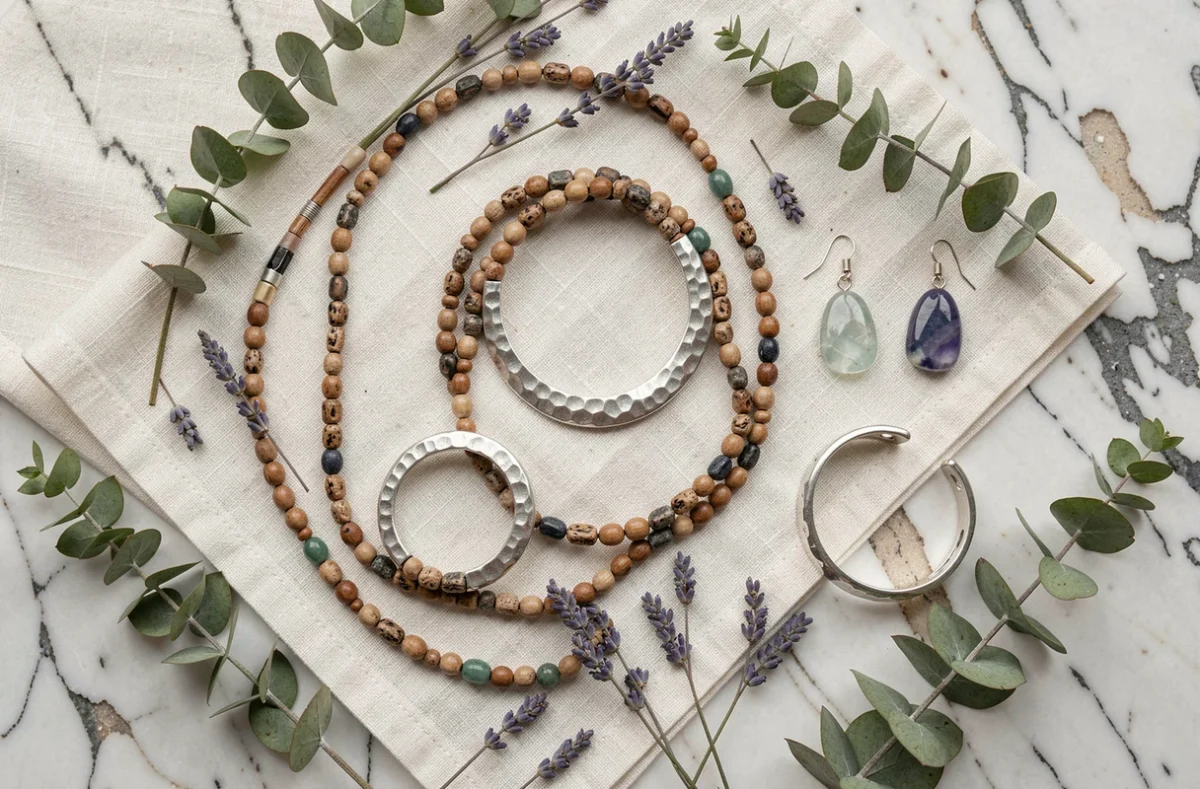
The current trends in handmade jewelry are not limited to a return of beads or the trend of oversized rings. The materials themselves are evolving, driven by demands for sustainability and transparency.
- Recycled silver is gaining ground in bracelet and necklace collections, as it allows for documenting a shorter supply chain than newly mined silver.
- Untreated natural stones (without resin or heating) are increasingly appearing in handmade earrings, driven by a demand for transparency in processes.
- Lead-free brass is gradually replacing traditional alloys in high-end costume jewelry, facilitating compliance with REACH thresholds without sacrificing gold finishes.
On the other hand, pure resin jewelry, which is very present on social media, raises long-term sustainability questions that few creators document. Resin yellows under UV exposure and scratches easily, limiting the actual lifespan of these pieces.
Earrings and Bracelets: The Most Sought-After Handmade Pieces
Earrings remain the most dynamic category in the handmade segment. Asymmetrical designs and textured hoops dominate online searches. Hand-hammered bangles and irregular band rings complete the trio of the most requested pieces.
The minimalist style is not disappearing, but it now combines with rougher finishes (hammering, intentional oxidation, open setting). This evolution corresponds to a visible search for authenticity: the jewelry must show the trace of the hand that made it.
Distinguishing a Reliable Handmade Jewelry Piece: Concrete Verification Points
Buying handmade jewelry online requires checking a few elements before trusting the collection photos.
- Does the product sheet mention the exact material (925 silver, brass, gold-plated on what base) or is it vague (“gold metal”)?
- Does the creator publish their REACH compliance conditions or at least a reference to standard EN 1811?
- Are the manufacturer’s identification details accessible, in accordance with the GPSR regulation?
- For post earrings, is the material of the post (often different from the body of the jewelry) specified?
A creator transparent about their materials offers better protection than a generic label. Trends in handmade jewelry evolve each season, but rigor regarding the composition of pieces remains the only reliable indicator of long-term quality.
The handmade jewelry market is structured around these regulatory and transparency requirements. The collections that will withstand the upcoming seasons are those whose creators document both their manufacturing processes and their aesthetic choices.