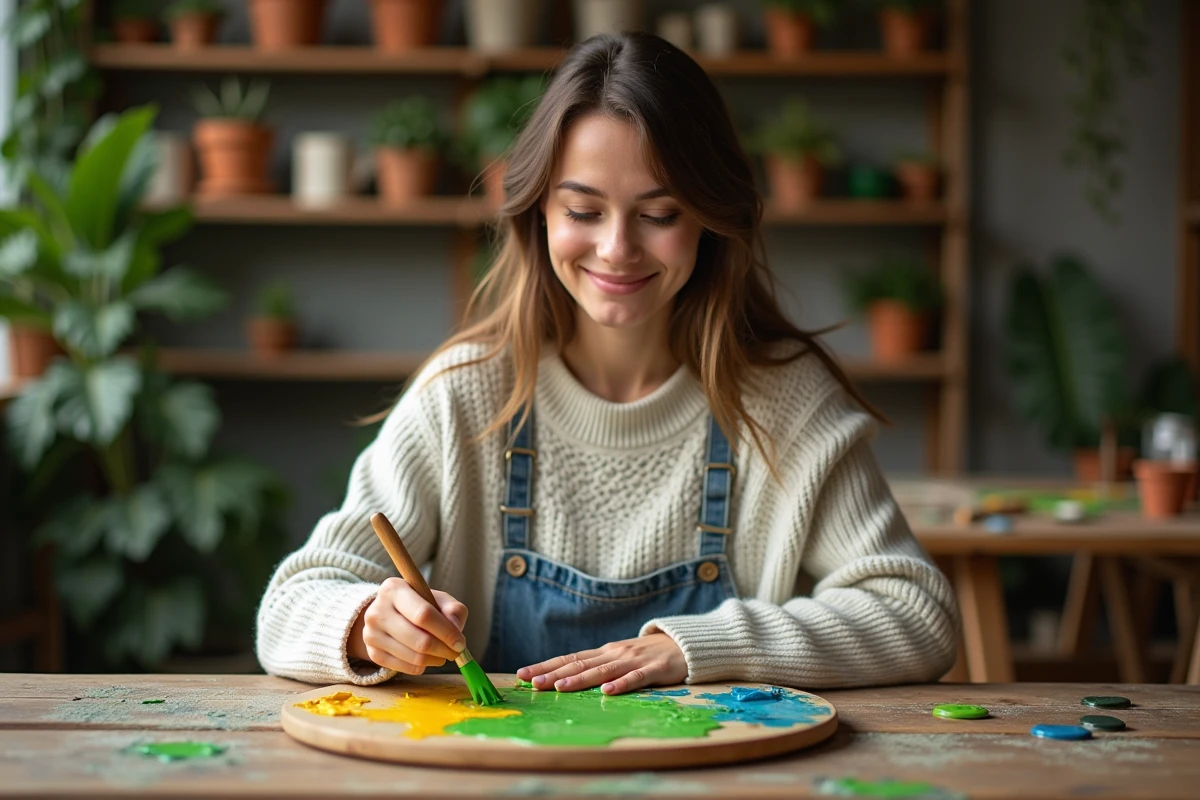
Mixing two colors never guarantees a perfectly predictable result, even for shades considered simple. Adding a yellow pigment to a green pigment does not always yield the same hue, depending on the nature of the dyes used or their respective proportions.
The chemical composition of pigments and the additive or subtractive logic modify the transformation obtained. Some green tones, already containing blue or black, react differently to yellow. Industrial standards, artistic practices, and printing uses make the question more complex than it seems.
Why the mixing of green and yellow intrigues color enthusiasts
The topic of green yellow mixing is far from trivial: it traverses artists’ studios, finds its way into graphic designers’ offices, and fuels debates among designers. As soon as a palette is placed on a table, the desire to combine these two colors arises. The color wheel serves as a compass, but surprises are never far away: each attempt reveals an unexpected shade, every light changes the game. The pigments, the proportion, the support… everything influences the final result.
This experimental play is far from marginal. Working with green and yellow means playing with the boundaries of color harmony, exploring the subtlest contrasts. Space creators, decorators, and scenographers draw from this duo to infuse energy, freshness, or tension into an atmosphere. On a palette, the mix can yield chartreuse, lime, or pistachio, depending on the hand and inspiration. This richness captivates, as it tells the infinite complexity of the colored language: each shade interacts, modulates, and transforms in contact with its neighbors.
An article like The color obtained by mixing green and yellow perfectly illustrates this diversity. It is not just a simple calculation, but a true color experimentation. From one variation to another, wavelengths, perception, and light open the way to a palette ranging from anise green to lemon green. Grasping this process means entering the beating heart of chromatic creation, where each shade carries a use, a meaning, a story.
What do we concretely obtain by combining green and yellow?
By combining green and yellow, we are not just settling for a simple mix. It is a playground for those seeking the right nuance. On a painter’s mixing palette or under the cursor of graphic software, their encounter gives birth to a tertiary color: green-yellow. This hue, between spring freshness and sunny brightness, comes in a thousand variations.
The result always depends on the quantities used. Here are some examples of shades that can be obtained based on the dosage:
- Anise green: a yellow that clearly prevails, for a bright and tangy rendering
- Lemon green: yellow dominates, the color gains in brightness
- Pistachio: just the right balance between green and yellow, guaranteed softness
- Olive: more green, the shade darkens and becomes more muted
- Chartreuse or lime: shades to be modulated according to the desired intensity and brightness
The support and light also play their role. On canvas or on screen, each shade vibrates differently. The green-yellow mix then becomes a reflection of an artistic choice, a search for color harmony, and a precise intention.
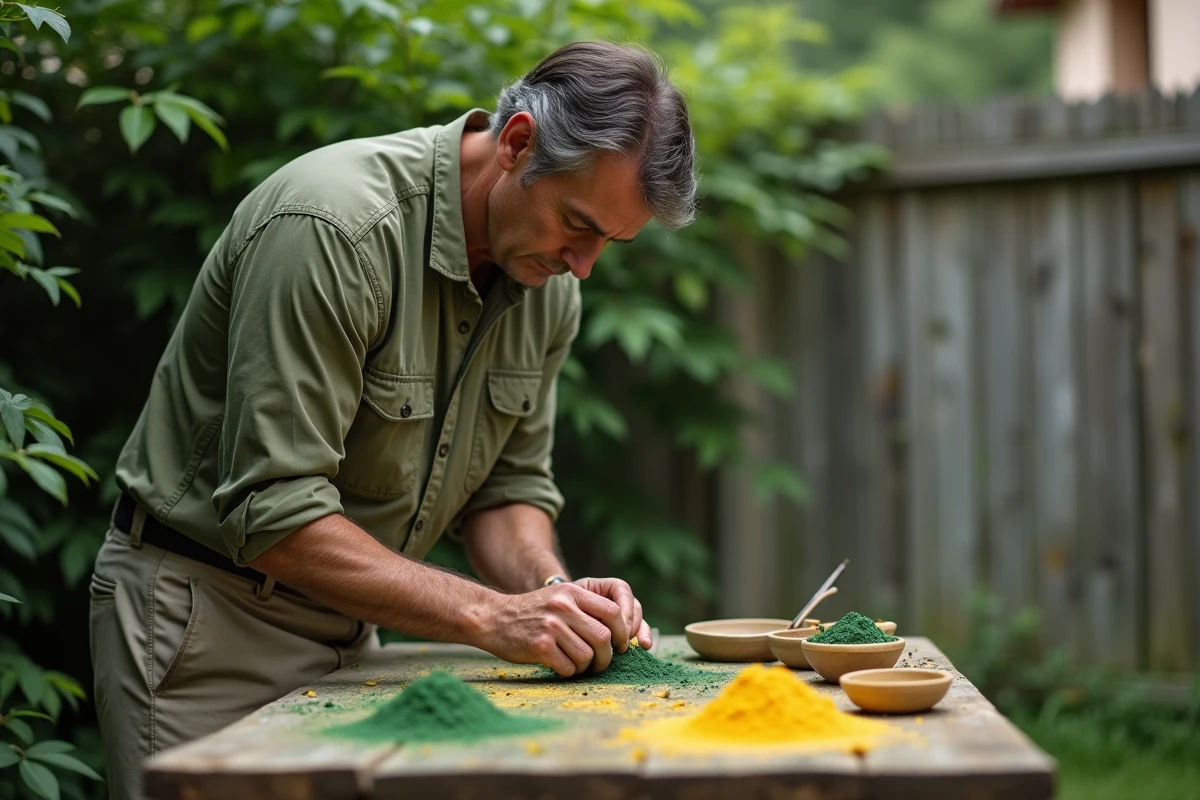
Shades, subtleties, and tips to enrich your creations with this mix
Combining green and yellow is much more than a technical operation. The way of proceeding, the technique used, and even the support modify the slightest nuance. In watercolor, the slightest drop of water transforms the hue, making it translucent, revealing almost living effects. Acrylic, on the other hand, offers an intense, sometimes striking rendering. As for oil, it imposes a long drying time: the drying gradually reveals gradients that one would not have anticipated.
On a palette, one can intervene to further modulate the mix:
- Add white to obtain pastel greens, very soft, almost milky
- Introduce black or burnt umber to enhance shadows and add depth
- Slip in a hint of colored gray to temper the brightness, ideal for muted or natural atmospheres
The color chart then becomes a tool for exploration, each variation revealing a new facet of color.
For those who want to delve deeper into subtlety, saturation deserves to be worked on. A touch of complementary color, red for green, purple for yellow, can break the purity and enrich the palette by creating unexpected harmonies. On screen, control is precise; with a brush, chance sometimes brings forth happy accidents, precious for giving character to a work.
Professionals know: the choice of support (watercolor paper, canvas, print) greatly influences the final rendering. Texture, transparency, ambient light shape the appearance of color, imposing a unique identity on each creation. And it is here, in this game of adjustments and surprises, that the green-yellow mix finds all its strength, that of a nuance that never presents itself the same way twice.