Mastering liquid measurement conversions is essential for any cook. Between traditional recipes and those found online, one often encounters various units: cups, milliliters, ounces, tablespoons. Adapting to these differences can be tricky, especially since precision is sometimes crucial for the success of a dish. Knowing the equivalents and having techniques to quickly and accurately convert liquid measurements is a valuable skill, helping to avoid mistakes and achieve perfect preparations.
The Essentials of Liquid Conversion in Cooking
Converting liquids effectively in the kitchen requires a clear understanding of measurement units and their relationships. The milliliter (ml) and the centiliter (cl) are the basic units for measuring liquid volumes. One milliliter is equivalent to 0.1 cl, which means that 10 cl in milliliters equals 100 ml. This direct relationship allows cooks to easily switch from one unit to another, keeping in mind that multiplying or dividing by 10 is sufficient for this conversion.
Cooking, the science of precision, often requires the use of larger measurements. The deciliter (dl), which equates to 100 ml, and the liter (l), corresponding to 1000 ml, are useful for larger quantities. The conversion chart then becomes an indispensable tool, allowing for quick visualization of these equivalents and adjusting recipes accordingly.
Beyond borders, Anglo-Saxon measurements such as the ounce (oz) and the US gallon (us) come into play. One fluid ounce, often used in English-language recipes, equates to approximately 28.35 g of liquid, while a US gallon equals 3.8 liters. These conversions require special attention to avoid any risky approximations that could alter the result of a preparation.
Let’s keep in mind that these volume measurements are intrinsically linked to the notion of precision in cooking. A slight deviation can turn a creamy emulsion into an uneven mixture, a refreshing sorbet into an impenetrable block of ice. Rigor in converting measurement units is therefore a guarantee of success for any dish, a commitment to culinary excellence.

Techniques and Tips for Measuring Liquids Accurately
In the culinary art, precision remains the key word. Measuring tools such as the teaspoon and the tablespoon are practical for small quantities. A teaspoon is generally estimated at 5 ml, while a tablespoon corresponds to 15 ml. These everyday utensils allow for measuring liquid volumes with low approximation, sufficient for most recipes.
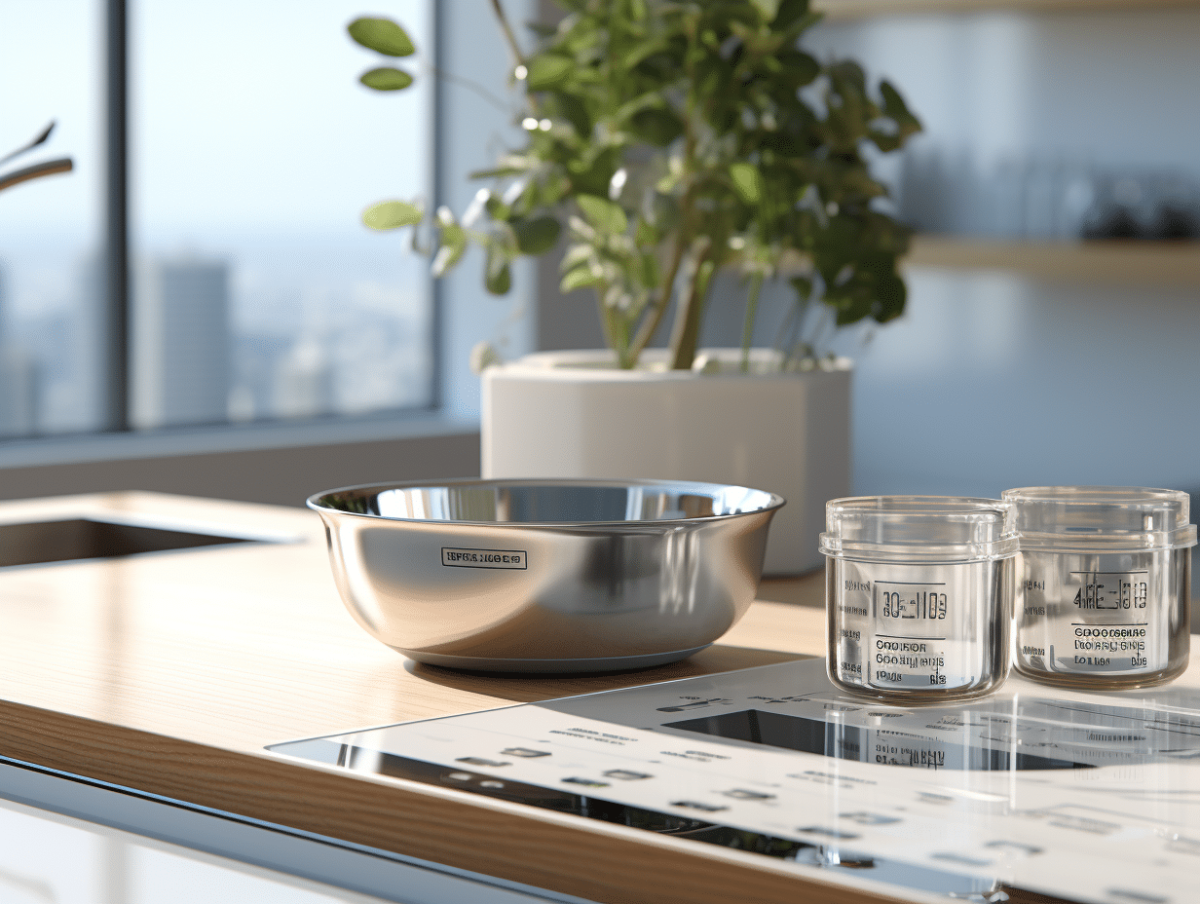
For larger quantities, the measuring cup and the measuring jug come into play. These containers, often graduated in various units, facilitate the conversion of liquids from foreign recipes. The increased precision they offer ensures adherence to proportions and harmony of flavors.
Let’s not forget the kitchen scale, an essential ally for conversions between volume and weight. Some liquids, particularly syrups or oils, require a conversion based on their density. The scale, with its precision to the gram, becomes an indispensable tool for exact measurements, especially when following recipes that demand high accuracy.
For a flawless conversion of different measurement units, equip yourself with conversion charts or dedicated applications. These resources allow you to convert measurement units quickly, whether metric or Anglo-Saxon, ensuring fidelity to original recipes. Rigor in liquid measurements is a sine qua non condition for the successful execution of any dish, a detail that does not escape the discerning palate.
Equip your kitchen with these valuable tools and integrate these techniques to navigate the world of culinary measurements with ease. Whether for a delicate emulsion or a generous soup, each precise measurement is a promise of preserved flavor.